Get Affordable ASSR Test in Lahore, Pakistan
What is the Auditory Steady State Response (ASSR) Test?
Who Needs an ASSR Test?
The ASSR test offers a reliable and efficient means of assessing hearing in various individuals. Here are some specific groups who may benefit from this test:
- Infants and young children: Assess hearing objectively before behavioral testing becomes reliable.
- Children with developmental delays or cognitive impairments: Gain insights without relying on instructions.
- Adults with suspected hearing loss: Identify issues even in noisy environments.
- Individuals with cochlear implants or hearing aids: Monitor hearing status and optimize device settings.
- Patients with neurological conditions: Evaluate auditory processing in cases like autism or brain tumors.
How Does the ASSR Test Work?
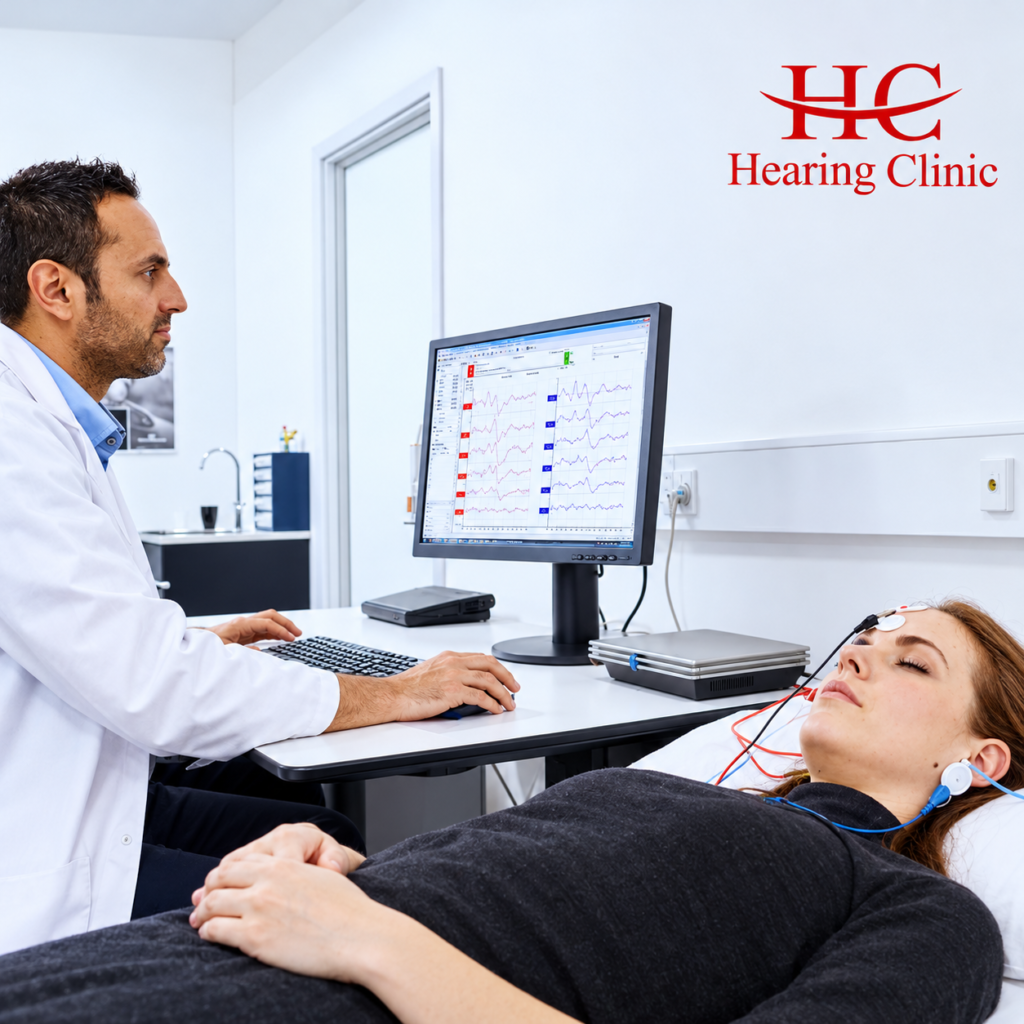
The brain activity is recorded using electrodes taped on the forehead and behind each ear. The use of electrodes eliminates the need for active participation by the patient (i.e., pushing a response button every time a tone is activated). The results are detected objectively using statistical formulas that determine the presence or absence of a true response. Similar to traditional audiometric testing, a threshold is determined as the lowest level at each frequency at which a response is present. ASSR provides an accurate, frequency-specific estimate of the behavioural pure-tone audiogram.
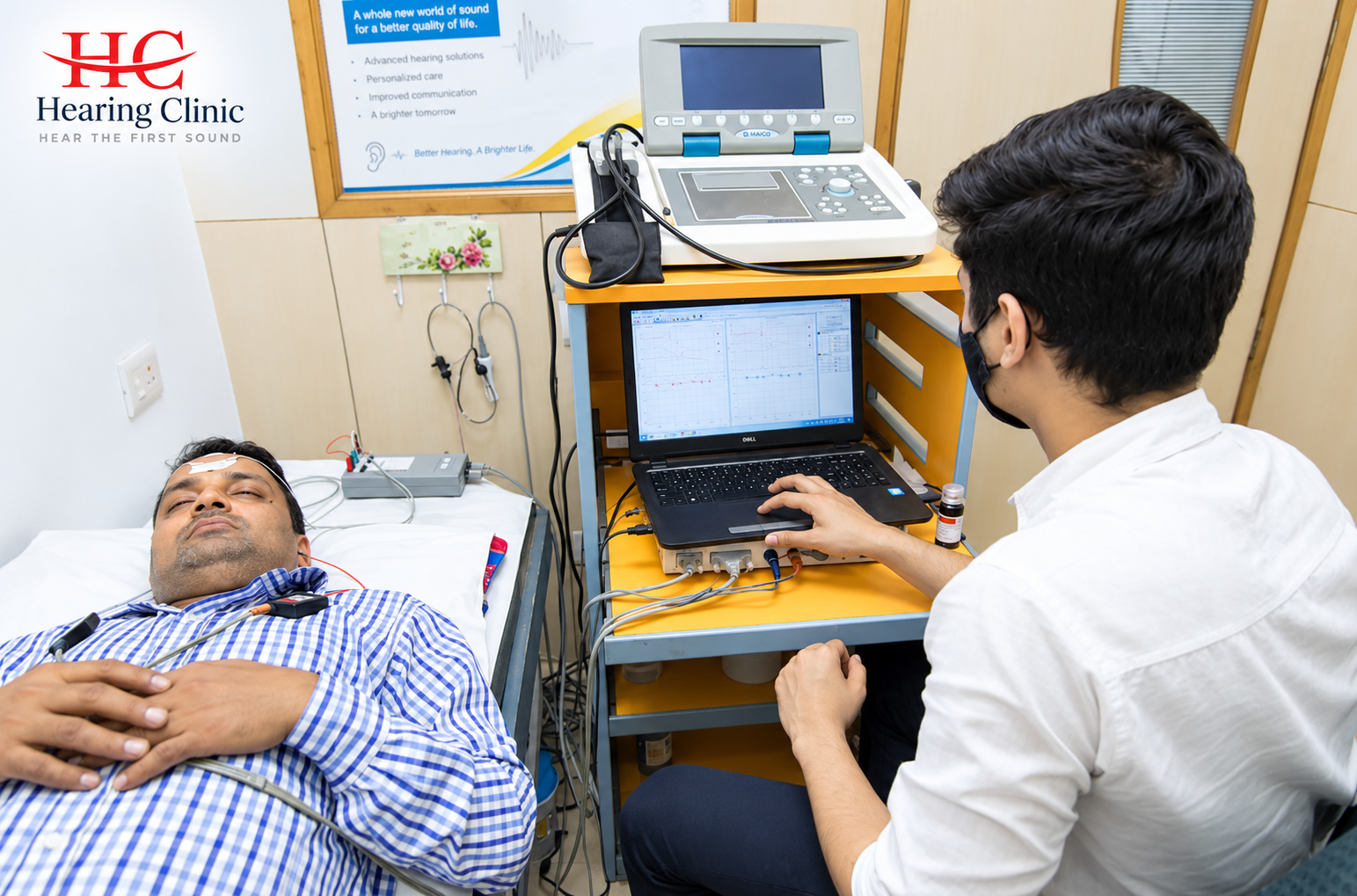
Why Choose Our Services for Your ASSR Test?
Experience and expertise
Our audiologists have experience working with all infants, children, and adult patients with special needs.
Comfortable environment
We prioritize your comfort and provide a warm, welcoming space to ease anxiety, especially for young children.
Convenient services
Book an appointment online and enjoy multilingual staff assistance and ample free parking.
Advanced technology
At Hearing Clinic, we utilize state-of-the-art equipment for precise and reliable results.
Personalized care
We believe in treating every patient with individual attention and addressing their needs
Clear communication
You'll receive detailed and easy-to-understand reports of your ASSR test results.
ASSR VS. ABR Test
Auditory Brainstem Response (ABR) and Auditory Steady-State Response (ASSR) are objective tests that measure hearing thresholds. They are useful for diverse settings but differ in a few important ways. Through this comparison, you will better understand the complexity of each test and evaluate which would be the most suitable for you.
ASSR Test vs. Other Hearing Tests
| Test | Method | Suitable For |
|---|---|---|
|
ASSR |
Brainwave detection |
Infants, non-verbal patients |
|
ABR |
Auditory brainstem response |
Neurological hearing issues |
|
OAE Test |
Otoacoustic emissions |
Newborn screening |
|
Pure Tone Audiometry |
Patient response-based |
Adults & older children |

Frequently Asked Questions
The ASSR test price in Lahore, Pakistan, ranges from PKR 9,000 to 12,000. It varies from lab to lab or clinic to clinic, but you will find a discount at the Hearing Clinic.
Generally, the average ASSR test takes 15-20 minutes but can range from 10 to 30 minutes.
No, The ASSR test is not painful. It involves placing small sensors on your scalp and listening to sounds through headphones to avoid physical discomfort.
After the ASSR test, the audiologists analyzes your brainwaves to determine hearing thresholds and brain processing. You then receive a report and discuss any next steps, like hearing aid recommendations or further testing, if needed.